Latest news: thousands of fake job ads taken down
Indonesia's Ministry of Communication and Digital (Komdigi) and the Ministry of Migrant Worker Protection (P2MI) took down 7,908 fake overseas job ads between January and August 2026. That is about 78 percent of the 10,504 reports Komdigi received (Kubu Raya Communications Office, 10 September 2026). The figure covers overseas jobs only, not promoter or usher offers. The lesson still applies: the P2MI deputy minister warned that a removed post can come back under a new link or account, so job seekers have to check for themselves.
People looking for event work often get offers through Instagram DMs, WhatsApp groups, or posters on social media. Fake offers blend in easily on those channels.
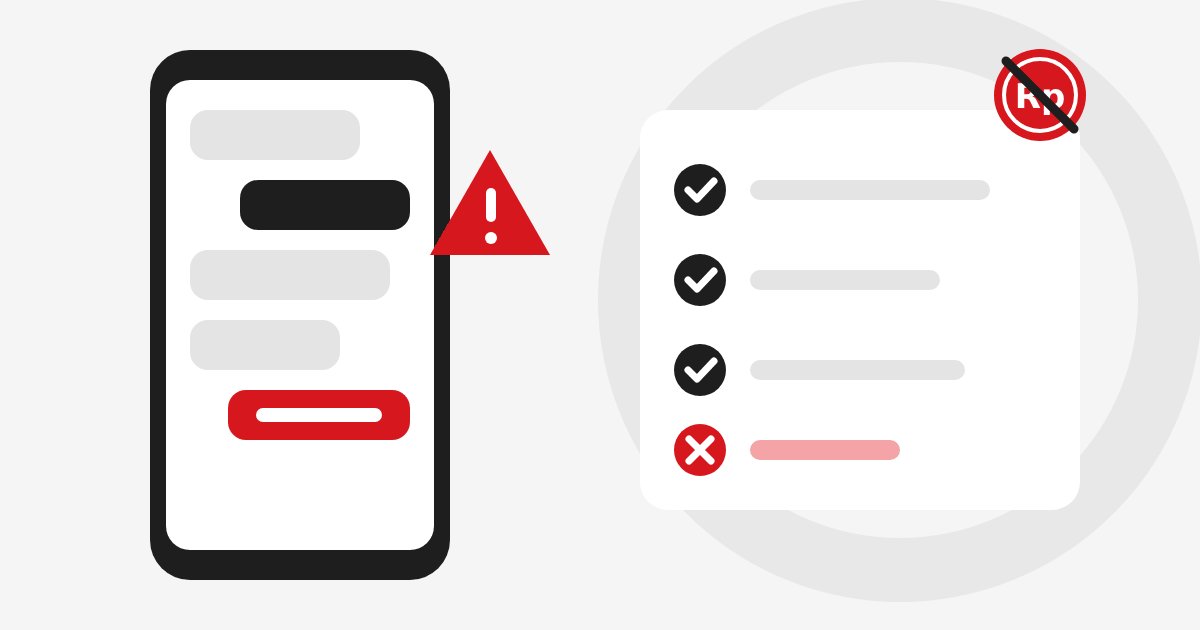
Five warning signs of a fake job, per the Ministry of Manpower
The Ministry of Manpower (Kemnaker) lists five common signs (Republika/Antara, 13 January 2025):
- A very high salary for a vaguely described position.
- An unofficial email address, such as a generic domain like @gmail.com.
- No clear company address, job duties, or logical requirements.
- A request to transfer money for administration, training, or work uniforms.
- A non-transparent process, such as an instant chat interview with no formal confirmation.
Kemnaker's head of public relations at the time stated that if any fee is charged during recruitment, it is almost certainly a scam.
Our note: many small, legitimate agencies do use WhatsApp and Gmail to organize crews. One sign alone does not prove a scam. The dangerous part is the combination, above all a request for money.
What it looks like for promoters and ushers
The table below is our application of those signs to event talent, not a quote from Kemnaker.
| What you see | Why it is a red flag |
|---|---|
| "Pay Rp100,000 for a casting or portfolio photos" | Paying to get work is Kemnaker's main warning sign |
| You must buy an ID card, uniform, or costume from the recruiter | Uniforms are among the excuses Kemnaker lists |
| No event name, client, venue, or date | The job description is unclear |
| Asked for an ID photo and bank number over chat right away | Personal data requested too early |
| Only one personal account to contact, with no agency profile or past events | The recruiter's identity cannot be checked |
| Pay far above what is usual for similar work | Unrealistic pay |
Keep two things apart. Being asked to bring your own black trousers or shoes is a job requirement, and you buy those yourself. Being asked to send money to a recruiter so you can join or be selected is what you should refuse.
Check before you say yes
- Ask for it in writing: event name, client or brand, date, venue, call time, pay amount, and payment date.
- Look up the agency or organizer yourself on a search engine and social media. Do not rely on links sent in chat. The Kubu Raya Communications Office advises opening the official website from your own search and checking the address carefully (summary, 8 September 2026).
- Add "scam" or "review" when searching a recruiter's name, as the FTC advice quoted there suggests.
- Hold back your data. Send your ID photo and bank number once the job details are clear and you know who is asking.
- For a venue you do not know, tell family or a friend where you are going, with whom, and when.
- For an offer in Temu Talent's name, open temutalent.id yourself in a browser and check there, not through a link in a chat.
If you already sent money or data
Stop talking to them and do not send more. If you transferred money, contact your bank or payment provider right away and keep the evidence: chats, account numbers, phone numbers, links, screenshots, and the transfer receipt. Change the password of any account whose details you gave.
To report, Kemnaker offers the hotline 1 500 630 and a form on its website (information as of January 2025, so confirm the number before calling). Kemnaker also says this kind of fraud can be reported to the police. Fake job content on social media and the web can be reported through AduanKonten.id, a Komdigi channel.
Sources
Checked on 11 November 2026. This article is general information, not legal advice.